How might you PR a wealth tax?
It's one of the hardest policy sells in British politics. Here's how I'd approach it, and why I'd…

Around 2013, just after I'd left the BBC, I was freelancing for an adtech company called VisualDNA. The business wanted to hire a PR agency to 'raise its profile' and my marketing colleague Tim and I had been tasked with creating a brief and hiring an agency.
After a bit of to-ing and fro-ing (another story), three agencies were invited in to pitch.
One was Frank PR, then one of the most celebrated consumer agencies in the country. They are superb. But they excel in high-profile activations and high-quality campaigns that require very big budgets, both in terms of agency talent and campaign costs.
Another was Powerscourt, again superb reputation. But with a focus on policy and reputation work that a small startup didn't need.
The third was Propeller, a specialist in media, marketing and ad tech that knew exactly which journalists covered the space.
Neither Tim nor I thought the business was ready for an agency. Firstly, there was disagreement on the brief. Sales wanted PR to explain the proposition. The founder wanted personal coverage for his entrepreneurial story and recognition as a successful business leader. We felt an agency for the first part of the brief was too lavish an investment as a driver of sales, and that the business was too early-stage and niche to command coverage in the startup & tech media, or generate national headlines.
In the end, Propeller won the pitch. To their credit, both Frank and Powerscourt didn't push for the business as they knew they weren't a good fit - and only came in to present creds as a favour to us. This left Propeller in a field of one. They did strong work, we got results, and I learned a lot about the sector. But the founder didn't value coverage in trade press like Campaign or The Drum, and the company didn't yet have the traction to break into national or tech media. And later on, the company hired a US agency on top to earn coverage in the US - a core market - but with even fewer credentials to offer as an early-stage UK startup.
So after about six months, a product launch campaign that bombed, and a PR spend well into six figures, we had to fire the agencies.*
Nobody behaved badly. The problem was the model. The business had rented PR to fill a gap it hadn't decided how to fill itself.
*I later went to work at Propeller. PR is a small world, and they were very good at what they did.
Should a growing business hire a PR agency or build PR in-house? After 25 years on both sides, my answer is that most growing businesses should start by building an in-house PR system they own, then bring in outside help to strengthen it rather than replace it. Here's why.
Many growing businesses treat PR as an on-demand service. They buy it when there's something to announce, hope for coverage next week, and switch it off the moment budgets tighten.
In my experience most agencies operate in good faith. But the retainer is a sunk cost, and when agencies compete to win business on the highest possible retainer, it's easy to over-promise. Trust breaks down on both sides.
And when the contract stops, two things disappear: the coverage, and everything the business learned while earning it.
Hiring an in-house PR specialist isn't a good move for a smaller firm. A graduate on £25,000 will typically lack the experience and relationships, so will want agency experience first. Someone with three or four years under their belt would cost nearer £40,000 and be limited by what the business can offer. A board-level communicator is £70,000-plus, which buys a lot of agency and is a huge investment when funds are tight. At that level, many will require a team or an agency budget on top.
So owning your PR doesn't have to mean owning a department. It means owning the system: the strategy, the messages, the spokespeople, the stories and the relationships. That's the gap a Fractional Director of Communications fills.
The first mistake I see repeatedly is a press release with nothing to stand on. This was the case with VisualDNA, who invested huge sums but had little in the way of credentials.
Journalists care about stories, people and ideas. If a business hasn't decided who it serves, what it stands for and why it's different, no amount of pitching will fix that.
I had learned this lesson early in my career. In my early twenties, a chance Radio 5 Live interview defending CD prices landed me the job of record industry spokesperson at the BPI, after Feargal Sharkey told my boss to give me the job full time. A hundred-plus TV and radio interviews later, I'm convinced journalists are the toughest crowd around.
And in the realm of business media, a business has to have enough provable commercial traction - namely sales revenue, customers on the record, and proof of investment - to pass the sniff test. Traction is far more important than the vision.
That's good news, though. If you can get a journalist to care, then convincing other important audiences you need to achieve that traction - such as customers, investors, partners and staff - gets easier.
Ashdown Phillips is a boutique commercial property firm, founded in 2004, competing with much larger rivals. In autumn 2023 it was building a flexible workspace offer, just as WeWork was heading into bankruptcy.
Working with the firm's Director and Head of Flexible Workspaces, we wrote a short, non-sales blog for the company website. It explained a different model: landlords going direct to occupiers through a property manager, rather than handing control to a co-working operator.
The site didn't have high domain authority. We didn't send a single cold pitch. A Financial Times journalist found the article through search, contacted the business which led to the spokesperson being quoted in a feature on what WeWork's collapse meant for flexible working.
Three things made it work:
The point is, it was owned content first. And when I published the case study on my own site a few years later, it led directly to me winning a major new client.
Owned content compounds in a way rented activity doesn't.
When budgets tighten, PR often gets cut early because it doesn't fill this quarter's pipeline. This is the classic short-term thinking that underestimates the long-term power of brand-building and misreads how business buying works.
Research by Professor John Dawes of the Ehrenberg-Bass Institute, published by LinkedIn's B2B Institute, found that only around 5% of B2B buyers are in the market at any one time (Marketing Week). The other 95% buy later, from the names they remember.
There's good news for challengers too. In the 2025 Edelman-LinkedIn B2B Thought Leadership Impact Report, 53% of decision-makers said brand recognition matters less when a company's thought leadership is strong.
Cutting PR doesn't save money. It defers the cost of obscurity.
Meanwhile, earning attention is getting harder. BuzzStream's analysis of the ONS Annual Population Survey puts UK journalists at around 52,400 in 2025, against roughly 78,800 PR professionals (BuzzStream).
And buyers increasingly ask AI tools who the leaders in a category are. Muck Rack's research found earned media accounts for 84% of the sources AI tools cite, with paid content at just 0.3% (Muck Rack, May 2026). AI can make content faster. It can't manufacture a point of view or a track record.
In 2007 I sat opposite Jon Snow on Channel 4 News. As the BPI's spokesperson, I was there to talk about roughly £41 million in damages against CD WOW for selling CDs illegally.
It was an accountability interview, and without a crystal-clear central message it would have run away from me. £41 million is a number. "Significant damages" is not.
Most founders won't face that kind of grilling. Their interviews are about vision and the state of their industry. But the habits are the same: anticipate the questions, acknowledge them, and bridge back to what matters. This skill works just as well with sceptical investors, prospective partners and employees, and sales objections.
I've turned what I've learned into Full Funnel PR, a method for building a PR capability a business owns. It has nine pillars in three phases: Strategy, Narrative and Activation.
Each client works from a live workspace holding its approved messages, spokespeople, stories and media contacts, with AI tools that draft and review work against those standards. It isn't a slide deck that gathers dust.
Big companies default to cautious messaging because they have more to lose. Growing businesses have the freedom to say something bold and useful. Challenger brands can't outspend incumbents. They have to out-think them.
If you're not sure where to start, the PR readiness check takes a few minutes.
If you'd like to build a PR capability your business owns, drop me a line at matt@fullfunnelpr.com or book a call. I've got a fair bit to say about it.
Should a growing business hire a PR agency or build PR in-house? Most should build an in-house PR system first: agreed strategy, messages, spokespeople and stories. Agencies and freelancers then add reach and capacity, rather than holding the knowledge that leaves when the contract ends.
How much does a PR agency cost for a UK SME? In my experience, boutique agencies typically charge £3,000 to £5,000 a month, and larger agencies £10,000 a month or more before campaign costs. There's also the cost of having the in-house talent that knows how to get the best out of them, the distraction that person has in managing a third-party, and the opportunity cost of investing those sums elsewhere.
What is a Fractional Director of Communications? A senior communications leader who works part-time inside a business, sitting between the founder or CEO and the marketing team. They own the PR function and build the capability, without the cost of a full-time hire.
Matt Phillips is an Oxfordshire-based Fractional Director of Communications and founder of Full Funnel PR. He's been the BPI's lead spokesperson, led corporate communications at the BBC during the iPlayer launch, and sat on the leadership team at Propeller. Read his profile on MarketMediaWire.
Keep reading

It's one of the hardest policy sells in British politics. Here's how I'd approach it, and why I'd…
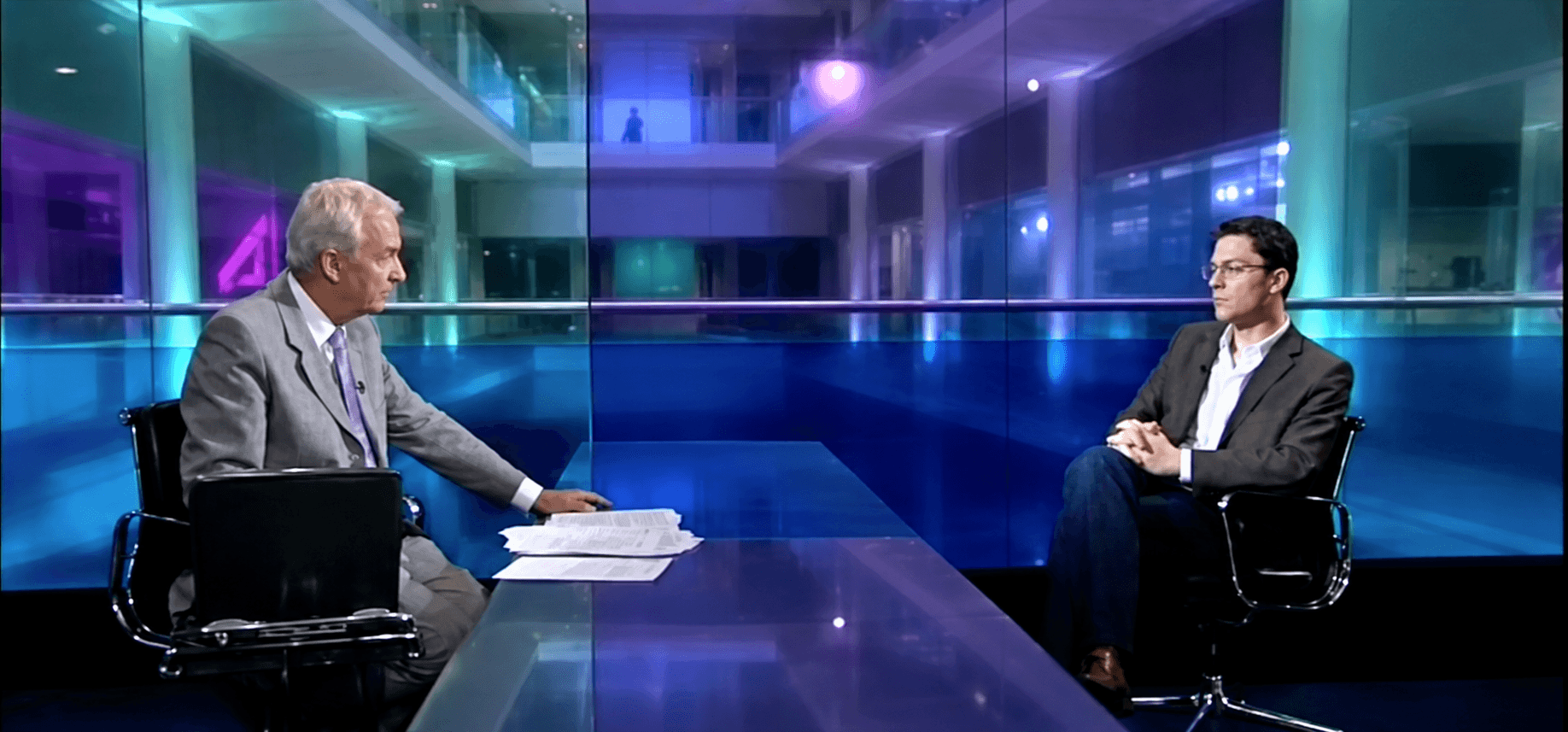
Five lessons from an accountability interview on Channel 4 News in 2007, and why a dummy run with a…
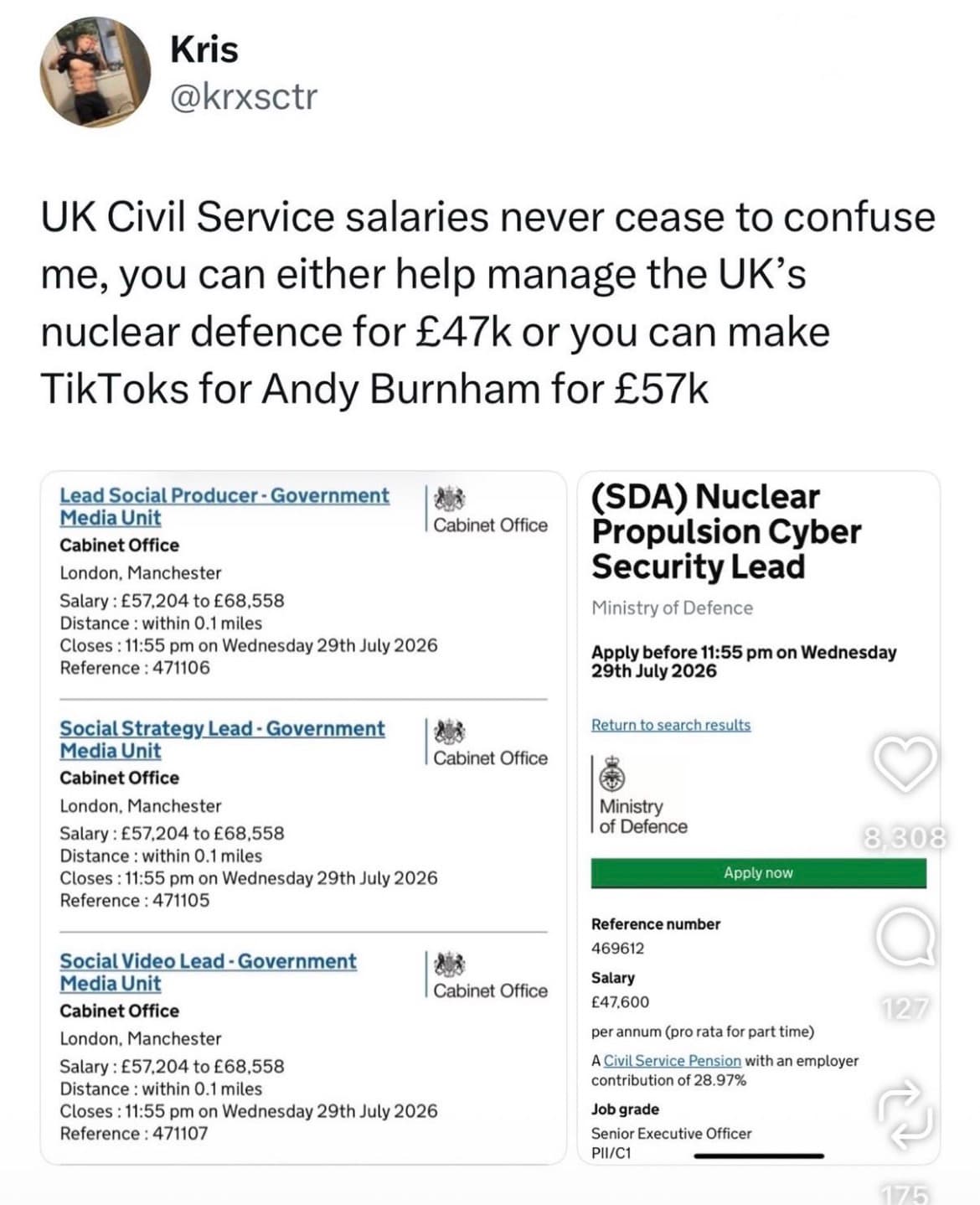
Why the fuss over a mid-salary job for the PM's social media team misses the point on PR's value.
The simplest way to find out whether we should work together is a short call. Tell me where you're trying to go, and I'll tell you how PR can get you there faster.