What a grilling from Jon Snow taught me about handling the media
Five lessons from an accountability interview on Channel 4 News in 2007, and why a dummy run with a…
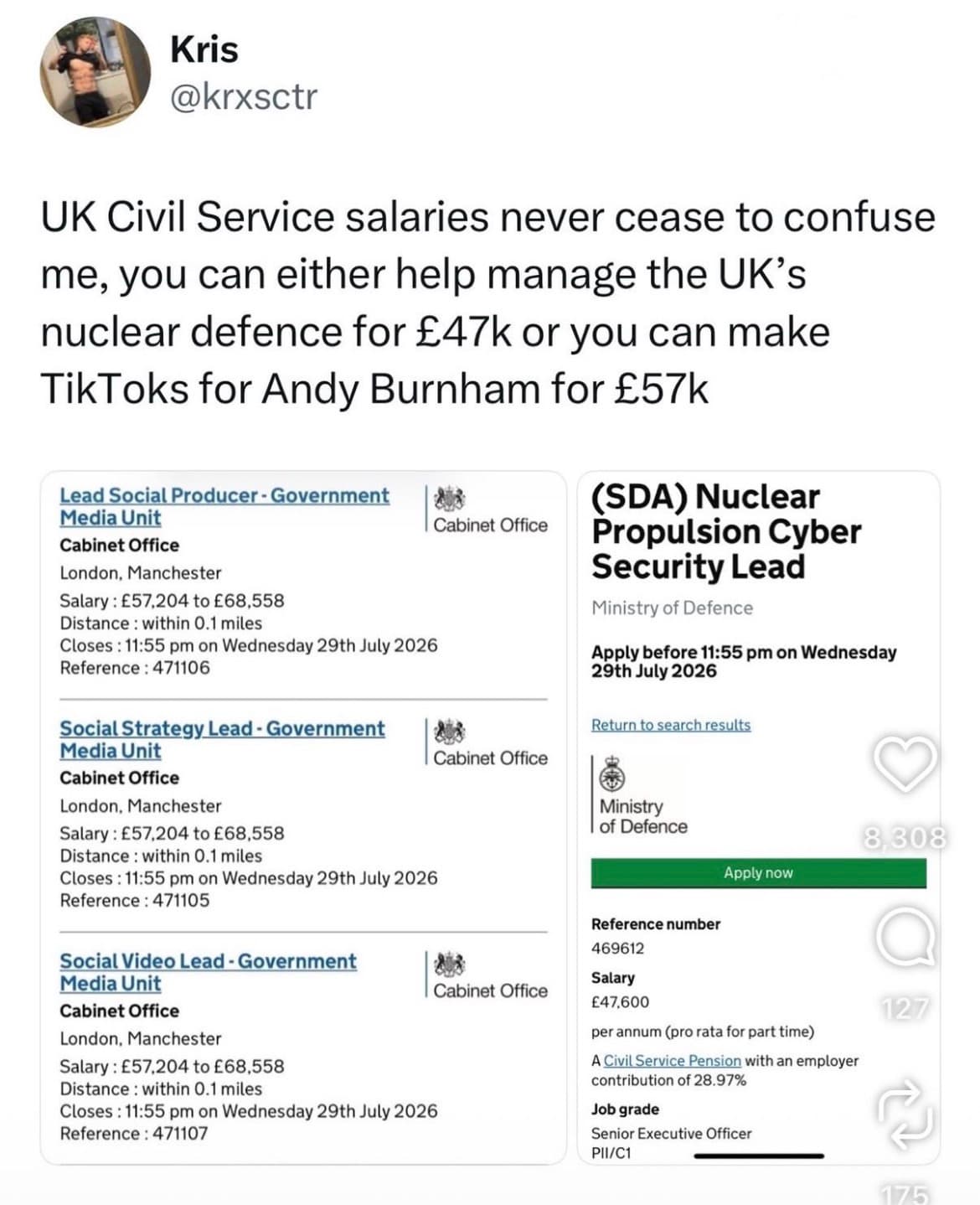
A tweet has popped up in my LinkedIn feed a few times this week, and on the face of it, it's damning.
You can help manage the UK's nuclear defence for £47,600. Or you can make TikToks for Andy Burnham for £57,204. Both civil service roles. Both advertised in the same week. Both closing today.
I saw it via a post from Katy Davies, managing director of Cap Air Systems, who was making a point about the value we afford to manufacturing and technical education roles. I agree with most of what she says and the points are good ones. She's certainly right that if the new Prime Minister means what he says about the university route no longer being the only route, then jobs advertising technical roles need to be similarly well remunerated.
My issue is with the assumption sitting behind the original tweet, which is that £57,204 to make content for the Prime Minister is too much.
You could describe the nuclear role as "sending emails and sitting in meetings", because a decent chunk of it will be exactly that. It would also be a useless description, because the mechanics of how a job gets delivered tell you nothing about what the job is for.
I don't want to get too po-faced about this. It's funny as it's deliberately phrased to make PR (let's be clear, that's what we are talking about here) sound trivial, and it works because a lot of people hear "social media" and think "not a proper job".
But the people responsible for how the Prime Minister of the United Kingdom communicates with the country, on the platforms where most people under forty spend most of their time, are doing some of the more consequential communications jobs in Britain.
Try the same comparison with old media and see how it sounds.
Would anyone raise an eyebrow at someone being paid roughly double the national average wage to produce party political broadcasts for the Prime Minister? Of course not. That's a proper job with a proper craft behind it, and nobody would think to sneer at it.
Making TikToks for the Prime Minister is a modern equivalent. Except it's arguably harder. A party political broadcast is a handful of set pieces a year, made with a crew, signed off by committee, with weeks of runway. Social is every single day. You have to turn up and be good every single day, at speed, with no second take and no meaningful margin for error.
And on reach, the argument doesn't even need making. A broadcast might reach millions on television. So does a single TikTok. The difference is that the TikTok reaches people who stopped watching television years ago, which is rather the point.
There's a further thing that gets missed. A party political broadcast is one way. It goes out, and whatever the nation thinks of it happens privately, in living rooms, where you'll never see it. Social is a conversation. If what you've made doesn't land, or lands wrong, the verdict is immediate, public and permanently attached to the post. Everyone can read it.
Which makes it a considerably more exposed medium to work in, particularly when the people you're producing it for are almost all over forty and rarely fluent in what feels authentic, engaging and credible in the context as far as younger audiences are concerned. Getting the register wrong, like a Dad At The Digital Disco, is easy. Getting it right, consistently, in public, is genuinely hard.
If you want a live demonstration, look at the week Zack Polanski has had.
An Instagram post from a Green Party event in Bristol, twenty-odd images, one of which showed a man in a T-shirt carrying a guillotine and a slogan riffing on the old XTC song, aimed squarely at Nigel Farage. Polanski accepted a collaborator request on the post, which put the whole lot in front of his 713,000 followers. He took it down as soon as it was flagged. The Greens say he hadn't seen what he was accepting.
I've no reason to doubt that. But it has cost him a couple of days of national coverage, a police referral from Reform, an active Met enquiry, and repeated on-air questions he plainly didn't want to be answering. All from one careless click.
And the context is unforgiving. Ann Widdecombe was murdered at her home three weeks ago and a man has been charged. That is the environment into which that image landed. Whatever the intent, the room was never going to be forgiving, and someone whose job it was to think about that should have been the last set of eyes before anything went out.
The irony, and I'll put this as carefully as I can, is that a post referencing execution has ended up throwing Farage a lifeline, and rope to hang his opponents. And by God are they out in force making the most of this opportunity.
Because Reform had been having a difficult few weeks. Nigel Farage is under investigation by the parliamentary standards commissioner over undeclared gifts, the Met have interviewed two people under caution as part of a related enquiry, and he's resigned his seat to fight a by-election in Clacton where his primary opponent is a man in a bin.
That's where the scrutiny had been. Then a careless click hands him a story he'd far rather be talking about, and the narrative moves. That's what a comms error actually costs. Not embarrassment. Agenda.
Now tell me the person guarding against that isn't worth £57,000.
The deeper point is this. Communications isn't a layer of gloss applied after the real work is done. It is how a leader sets out where they're going, what they stand for, and why the difficult decisions on the way are worth making. It's the mechanism by which a vision stops being a private intention and becomes something other people can follow.
Get it right and it's a foot planted firmly in the right direction. Get it wrong and it undoes months of quiet progress in an afternoon.
I'd argue that poor public relations is a large part of what finished Keir Starmer. Not because he lacked capable people. He had some genuinely excellent ones. But because if the vision isn't clear in the first place, no amount of communications craft will conjure one into being. You cannot communicate a direction you haven't chosen. The best comms operation in the world can only ever amplify what's already there.
Andy Burnham has understood the opposite for a very long time. Whatever you make of his politics, he's a particularly effective communicator with a clear sense of what he's for and the direction he wants things to go. So three senior social roles advertised out of the Cabinet Office in the same week isn't vanity, and it isn't the state spending our money on fluff. It's entirely consistent with a politician who has always taken the job of being understood seriously, and who is arguably where he is today because of it.
The same logic applies to every business I work with.
If you're running a manufacturer whose margins are being squeezed, or a founder trying to get a serious idea in front of serious buyers, the temptation is always to treat communications as the thing you'll get to once the real work is done. It isn't. It's your licence to operate. It's how you lead. It's how you inspire others to support you in getting the work done. It's how anyone outside your building finds out that anything important is happening at all.
Underestimate that at your peril.
If you've ever had to defend the comms line in a budget meeting and lost, drop me a line. I've got a fair bit to say about it!
Keep reading
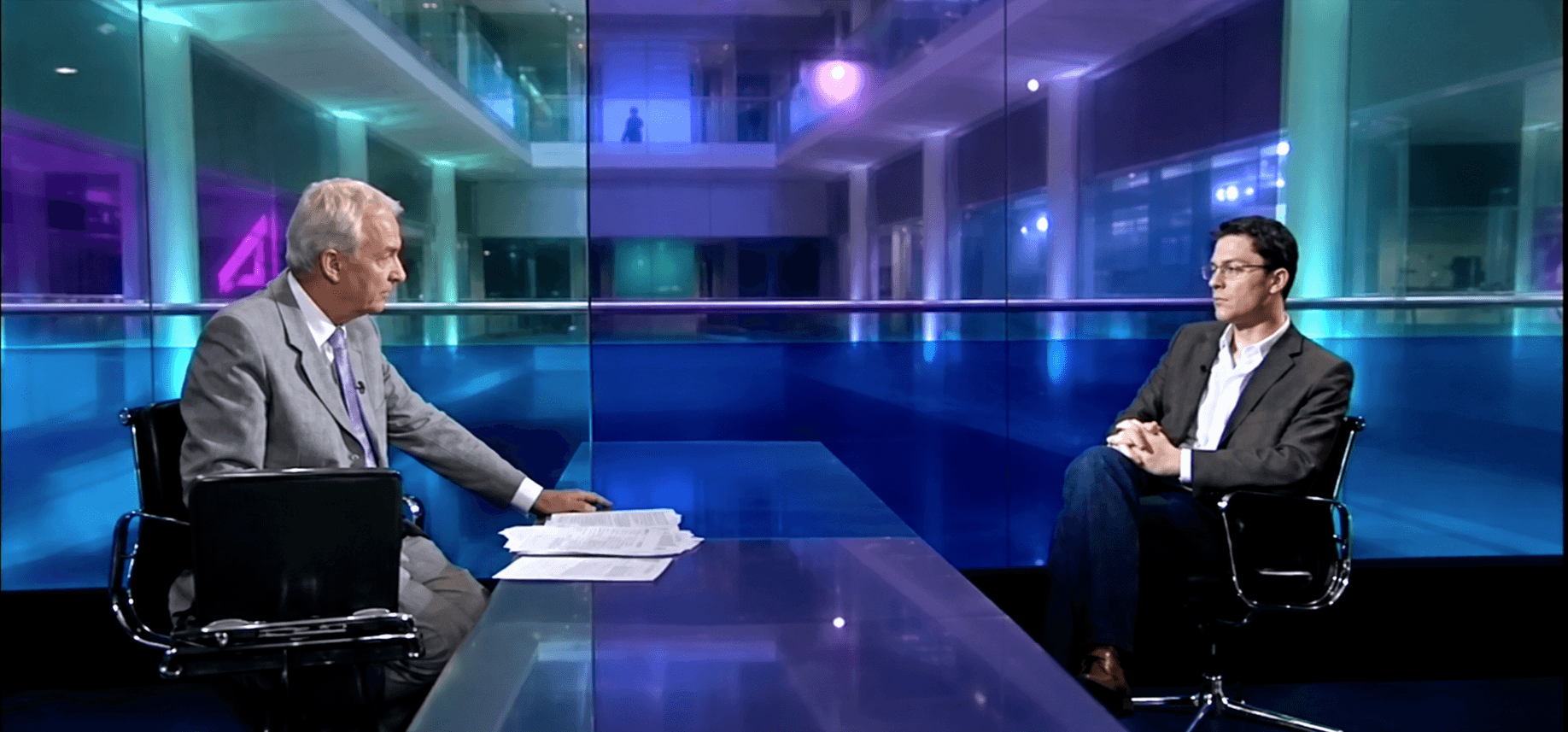
Five lessons from an accountability interview on Channel 4 News in 2007, and why a dummy run with a…
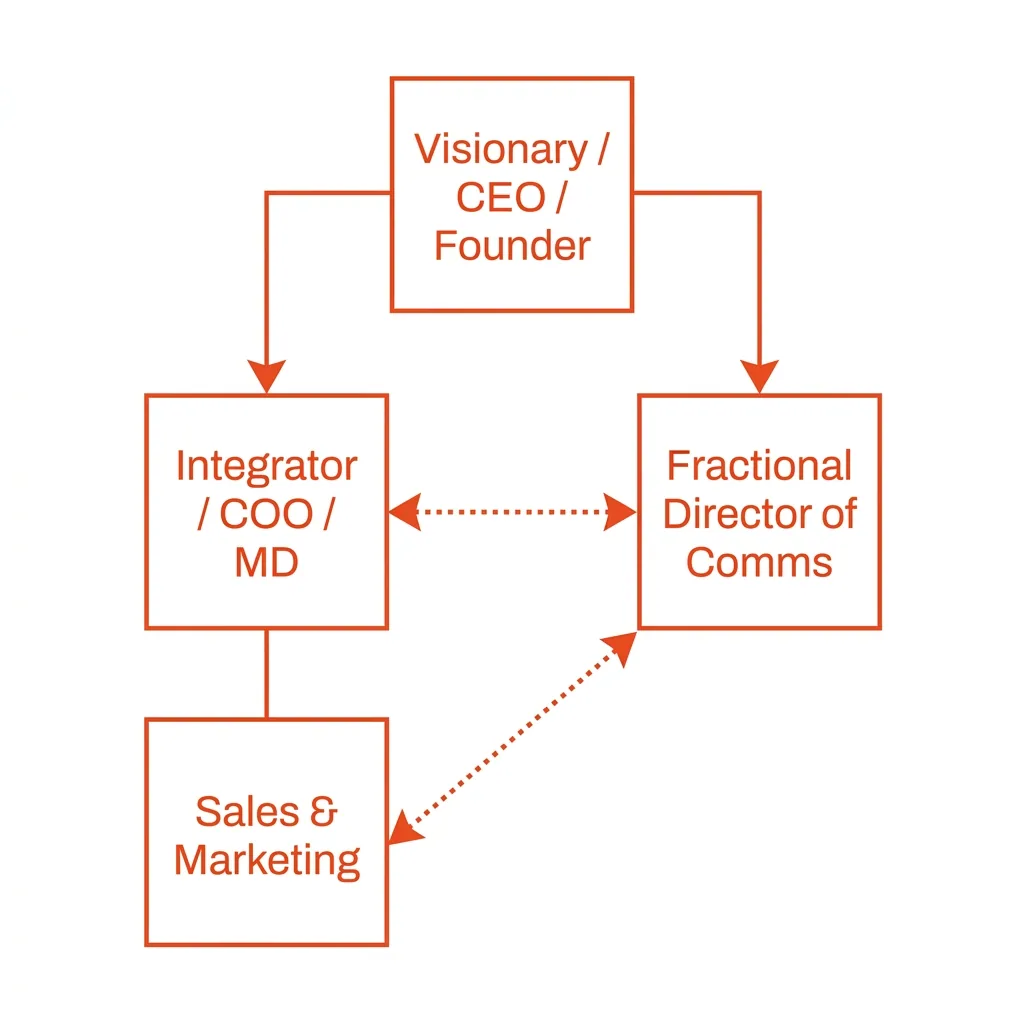
Consultant, agency, freelancer or fractional comms director? What’s the difference, and what PR…
I’m a new member of Pimlico Group, a consultant collective. I’ll advise marketers on how to manage…
The simplest way to find out whether we should work together is a short call. Tell me where you're trying to go, and I'll tell you how PR can get you there faster.